How to Increase AOV on Shopify


[ Summarize with AI ]
A store does not always need more traffic to generate more revenue. Sometimes the bigger opportunity is getting each customer to buy a little more.
If you want to increase AOV on Shopify, the goal is not to push more products in front of every shopper. It is to make adding another product feel useful enough that customers naturally increase their order.
That can mean a bundle, a relevant add-on, a higher-value version of the product, or a free shipping threshold that gives shoppers a reason to add more.
The important part is choosing the right tactic for your products, margins, and customer behavior.
What is AOV and why does it matter?
AOV, or average order value, is the average amount spent per order. Shopify calculates it using sales, discounts, and orders, with post-order adjustments excluded.
AOV matters because increasing it can generate more revenue from the orders you already have.
But AOV is only useful when you understand what sits behind the average. A store can have a high AOV because of a small number of unusually large orders while most customers continue buying much less.
Shopify recommends looking at the mean alongside the median and mode for this reason. The distribution of your orders can tell you much more about where an AOV opportunity actually exists.
Should you focus on AOV or the most common order value?
Look at both.
Suppose your AOV is $80, but your most common orders are around $55. Building every AOV offer around $80 may not make sense if most customers never get close to it.
The modal order value, meaning the most frequently occurring order value, shows where a larger share of customers actually sits.
That can help you decide whether a $10 add-on, a $15 bundle upgrade, or a quantity offer is more realistic than trying to push every shopper toward a much larger basket.
If most customers spend $55, moving a meaningful share of those orders to $65 may be more valuable than turning a small number of $150 orders into $200 orders.
The same thinking applies when looking at your conversion research and UX audit. Before adding another offer, understand where customers are already behaving differently.
How do you increase AOV on Shopify without hurting conversion?
Start with customer behavior, not an upsell app.
Look for products customers already buy together, products they repeatedly purchase, orders that sit close to a useful threshold, and products where customers regularly choose a more expensive version.
Then test the offer that fits that behavior.
The goal is not to make every customer spend more. It is to make the additional purchase useful enough that customers choose it without creating friction.
This distinction matters because AOV and conversion rate are connected. A tactic that adds $15 to an order but causes fewer people to complete checkout can make the store worse overall.
Which AOV strategies are worth testing?
The main opportunities are bundles, cross-sells, upsells, quantity breaks, free shipping or gift thresholds, cart offers, and post-purchase offers.
They work in different situations.
A customer who needs two complementary products may respond to a bundle. Someone who regularly buys three units may respond to a quantity offer. Someone who has already completed checkout may be a better candidate for a post-purchase offer than another promotion inside the cart.
The tactic should follow the buying behavior, not the other way around.
That also means looking beyond the product page. Your CRO program can address the wider buying journey, including merchandising, product-page decisions, cart behavior, and checkout friction.
When should you use product bundles?
Use a bundle when several products naturally belong together or solve the same customer problem.
A skincare routine, coffee setup, travel kit, or pet-care package can make more sense as a complete solution than as several separate products.
Bundles can also make the buying decision easier because the customer does not have to work out which products belong together.
The strongest bundles usually have a clear reason for existing. They are not simply several products grouped together because the merchant wants a higher AOV.
For example, if customers frequently purchase a cleanser and moisturizer together, presenting them as a routine may be more useful than showing five unrelated recommendations.
That makes bundling both an AOV tactic and a merchandising decision.
Can too much choice hurt a bundle?
Yes. A build-your-own bundle gives customers flexibility, but too many choices can turn a simple purchase into a decision-making exercise.
A useful test is to compare a curated bundle with a flexible version.
If customers already know what they need, a fixed bundle may be easier. If preferences vary significantly, letting customers choose may work better.
The question is not which bundle format is more sophisticated.
It is which one makes the purchase easier while increasing the value of the order.
How can product-page optimization increase AOV?
The product page is often where customers decide whether another product, larger quantity, or upgraded version is worth considering.
AOV opportunities here should support the primary purchase rather than distract from it.
For example, a premium version can be positioned next to the standard product when the difference is easy to understand. A complementary product can be introduced when its relevance is obvious. A bundle can be presented when buying the products together solves a larger problem.
The important question is what the customer needs to make the original purchase more valuable.
This is why UX and page redesign can be relevant to AOV work. Sometimes the problem is not the lack of an offer. The offer simply is not being presented at the right point in the decision.
When do quantity breaks make sense?
Quantity breaks work best when customers naturally consume, replace, or use more than one unit.
For example:
- 1 unit: $30
- 2 units: $54
- 3 units: $72
This can work for supplements, skincare, food, household products, pet products, and other consumables.
But do not add a quantity discount simply because you want a higher AOV.
If customers have no reason to buy three units, the discount may simply reduce your margin on customers who were going to buy one anyway.
Quantity offers work best when the additional units have a clear use case, such as replenishment, sharing, convenience, or a better effective price.
How do cross-sells increase AOV?
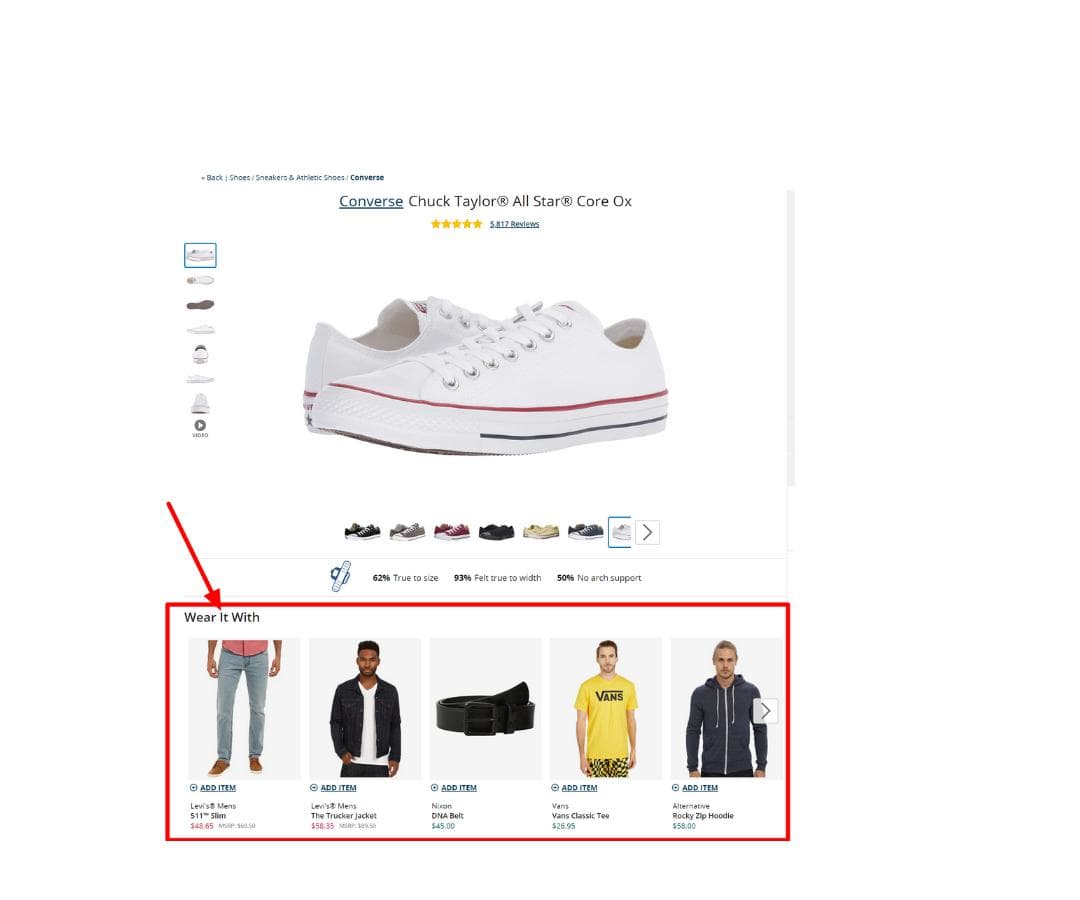
A cross-sell gives customers a relevant product that complements what they are already buying.
A camera may need a memory card. Running shoes may pair with socks. A coffee machine may need filters or beans.
The strongest cross-sell question is simple:
What else would make this purchase more useful?
Start with your actual order data when possible. Products frequently purchased together are a better starting point than whatever product has the highest margin.
You can also look at product compatibility, customer reviews, support questions, and repeat purchase behavior to find relationships that raw order data may miss.
A cross-sell should feel like help, not another sales pitch.
When should you use an upsell?
Use an upsell when there is a clear higher-value version of the product. That might be a larger size, premium version, higher quantity, or upgraded package.
The value difference needs to be easy to understand.
If customers have to study five versions before deciding, the upsell may create more friction than value. If the upgrade solves an obvious need, it can increase order value without requiring another product.
A useful upsell is often about reducing a future problem. A larger size may mean fewer replenishment orders. A premium version may provide a feature the customer already wants. A multi-pack may be more convenient. The upgrade needs a reason.
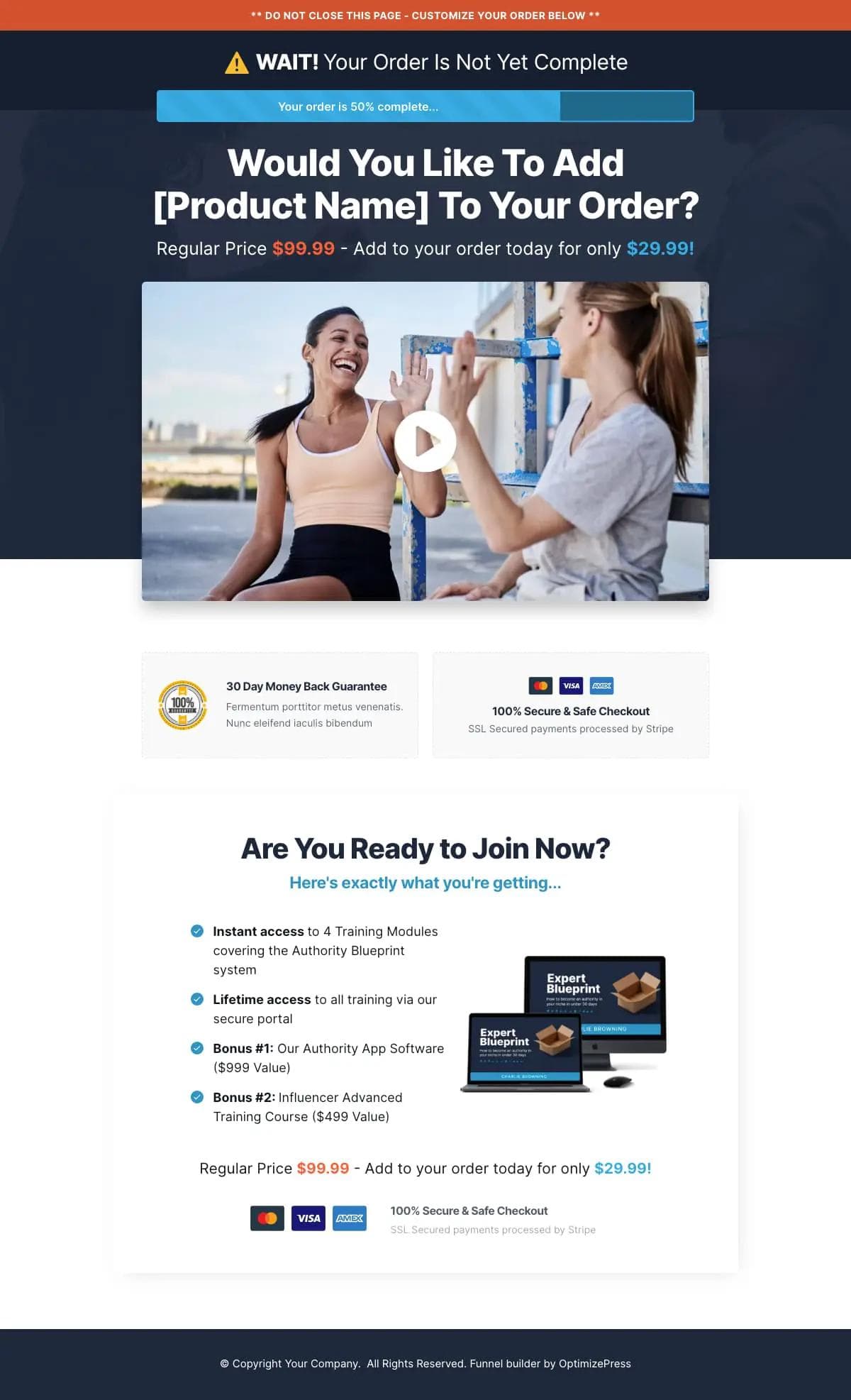
Where should upsells and cross-sells appear?
There is no universal placement that wins for every store.
Product pages, cart drawers, checkout, and post-purchase screens all create different opportunities. The right placement depends on the customer's decision and whether the offer adds value at that moment.
On the product page, the customer is still deciding what to buy. In the cart, the customer has already selected something and may be more receptive to a complementary product. After checkout, the original purchase has already been completed, which creates a different opportunity.
Your cart and checkout optimization should therefore consider both conversion and AOV rather than treating them as separate problems.
Even express checkout can affect AOV strategy. One recent store-specific test reported lower revenue per visitor after adding express checkout buttons because some shoppers bypassed cart add-ons. That is not a universal rule, but it shows why placement should be tested rather than assumed.
Can free shipping increase AOV?
It can, but do not assume that raising the threshold will work.
A common strategy is to put free shipping slightly above AOV so customers add another product to qualify. In practice, the threshold can also create enough friction to reduce conversion.
Recent DTC Pages research analyzed 27 free-shipping tests across 14 Shopify brands and found that none of the three tests that raised the threshold won, while four of six tests that lowered it won. The sample is limited, so it should not be treated as a universal rule, but it is a strong reason to test rather than automatically raise the threshold.
The broader lesson is more important than the exact result: free shipping is an economic decision, not an AOV trick.
How should you set a free shipping threshold?
Start with the distribution of your orders, not just your average.
If your most common orders are around $55, a $65 threshold may create a realistic opportunity to add one useful product.
But if your threshold is already below what most customers spend, raising it may simply make shipping less attractive without changing what they buy.
Look at how many customers currently fall below the threshold, how much they would need to add, and what products could realistically bridge the gap.
Shopify provides benchmark data based on comparable stores, but your own order distribution is more useful for deciding what makes sense for your customers.
And test the threshold before making a permanent change.
Can you increase AOV without discounts?
Yes, and you often should.
A discount can increase the size of an order while reducing the value of that order. If a customer would have spent $100 anyway, giving them 15% off for reaching $100 did not create $100 of incremental revenue.
Bundles, relevant add-ons, free gifts, premium upgrades, and quantity offers can create a reason to spend more without discounting the entire order.
There is also a difference between giving more value and simply charging less. A useful bundle may increase perceived value while preserving margin better than a blanket percentage discount.
The question is not whether an offer gets used. It is whether the offer changes customer behavior enough to justify what it costs.
How does margin affect AOV optimization?
AOV should always be considered alongside margin.
An order worth $120 is not necessarily better than an order worth $100 if the extra $20 came from a deep discount, expensive shipping, or a low-margin product.
For each AOV tactic, understand what happens to gross profit after discounts, product costs, fulfillment, shipping subsidies, and other relevant costs.
This becomes especially important with free gifts and quantity discounts. A higher order value can look impressive in Shopify while producing less contribution profit.
The goal is not simply to increase what customers spend. It is to increase the economic value of the customer relationship.
How should you measure an AOV offer?
Do not judge it by AOV alone.
Look at revenue per visitor, conversion rate, profit per order, units per order, repeat purchase behavior, and discount or incentive cost alongside AOV.
Revenue per visitor is particularly useful because it captures both how much customers spend and how many visitors actually become customers.
For example:
- AOV ↑ 10%
- Conversion ↓ 12%
That is not automatically a win.
But:
- AOV ↑ 6%
- Conversion stable
- Revenue per visitor ↑ 8%
This could be a much stronger result. The point is to improve the economics of the store, not just one metric.
What is a good AOV for a Shopify store?
There is no universal AOV target.
A healthy AOV depends on product prices, margins, customer acquisition costs, purchase frequency, and the type of customers you attract.
Shopify provides benchmark data based on similar stores, including median, 25th percentile, and 75th percentile comparisons. Those benchmarks can provide context, but they should not replace your own historical data.
Your most useful benchmark is usually your own store: where customers are spending, how that changes over time, and what happens to conversion and profit when you change the offer.
A $100 AOV may be excellent for one business and weak for another.
The right question is not "What AOV should a Shopify store have?"
It is "What AOV makes sense for our economics, and what prevents more customers from reaching it?"
How can cart optimization increase AOV?
The cart is often one of the cleanest places to increase order value because the customer has already demonstrated purchase intent.
That makes the cart useful for complementary products, small add-ons, quantity adjustments, free-shipping progress, and relevant bundles.
But the cart should not become a second product catalog.
If customers have already selected what they want, presenting ten more recommendations can create unnecessary decisions. A smaller number of highly relevant options is often easier to evaluate.
You can also use the cart to answer a simple question:
Is there anything the customer is likely to need with what they have already chosen?
That is a better starting point than adding recommendations simply because the cart has available space.
Can checkout optimization affect AOV?
Yes, but the first priority at checkout is still completing the purchase.
An AOV tactic that makes checkout harder can cost more revenue than it creates.
This is particularly important for stores with high-intent customers. If someone is ready to pay and the checkout suddenly introduces multiple offers, recommendations, or complicated choices, the additional AOV opportunity may not justify the friction.
A strong checkout optimization strategy therefore considers the full trade-off between order value and completion rate.
Sometimes the best AOV improvement is not adding another offer. It is removing friction so more customers complete the orders already in progress.
Are post-purchase upsells worth testing?
Yes, especially when the additional product is closely related to what the customer just purchased.
The main advantage is that the original transaction has already happened. You can offer something relevant without changing the customer's initial product-page or checkout decision.
For example, a customer buying a starter product could be offered a complementary product or larger version after completing the purchase.
Post-purchase offers can also connect AOV with retention when the additional product creates a reason to purchase again.
This is particularly useful when the first purchase introduces a customer to a product category with natural follow-up purchases.
Can subscriptions increase AOV?
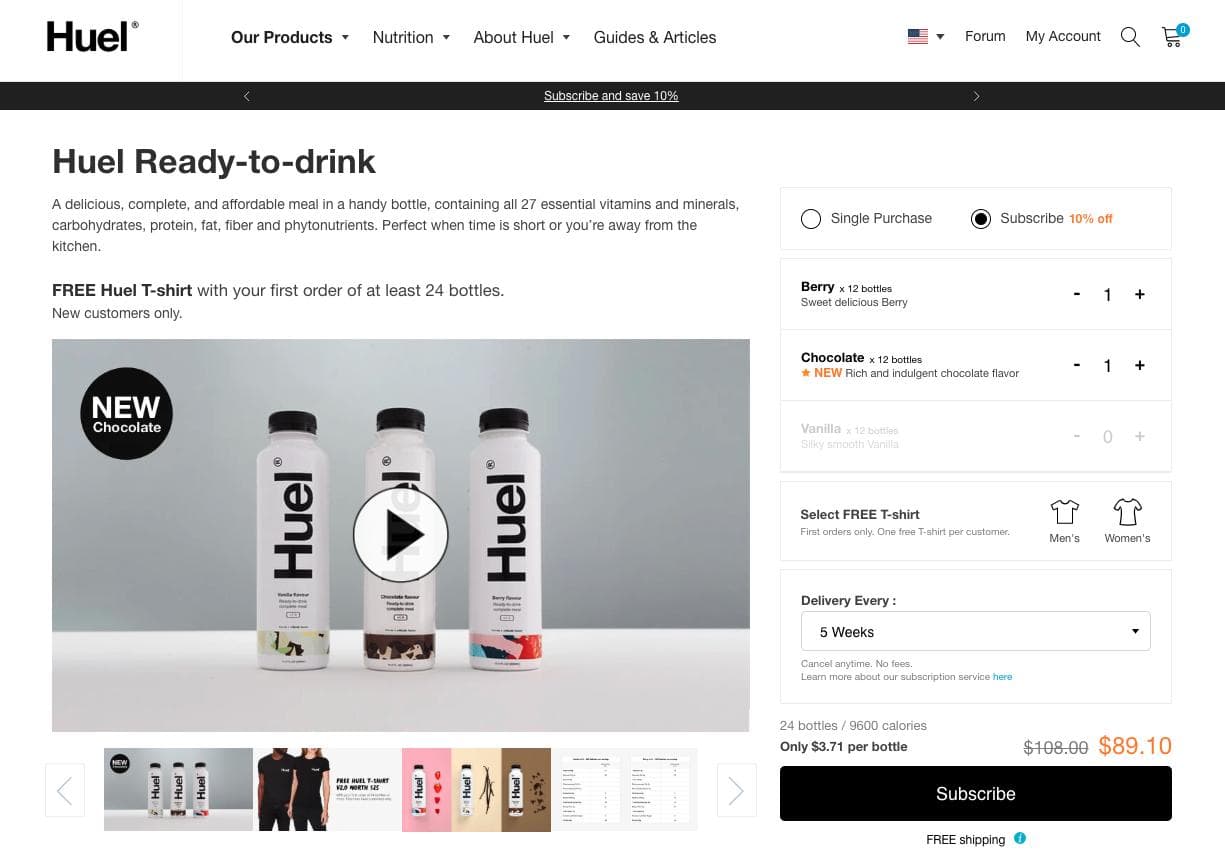
They can when the product is naturally replenished or consumed over time.
Customers may choose a larger quantity per delivery, a multi-pack, or a subscription bundle instead of repeatedly buying a single unit.
But subscriptions should not be judged only by the initial AOV. Churn, retention, fulfillment costs, and customer lifetime value matter too.
For stores with recurring products, subscription and loyalty optimization can therefore be a broader growth opportunity than a one-time upsell.
A subscription that produces a slightly smaller first order but creates several profitable future orders may be more valuable than a one-time offer that produces a larger first purchase.
How does AOV connect with retention?
AOV and retention can reinforce each other. A bundle can introduce customers to more of your product range. A quantity offer can create a natural replenishment cycle. A post-purchase recommendation can give customers a reason to buy again.
That means the value of an AOV tactic may extend beyond the first order.
If customers who buy a certain bundle also have a higher second-purchase rate, the bundle is not just an AOV tactic. It may be improving customer lifetime value.
This is why retention marketing should be considered alongside AOV for brands with meaningful repeat-purchase behavior.
Email and SMS can also continue the relationship after the first order. A customer who buys a product with a predictable replenishment cycle may need a timely reminder rather than another aggressive acquisition campaign. A broader email and SMS strategy can help connect the first order to future revenue.
What AOV mistakes should Shopify stores avoid?
1. Chasing AOV instead of profitable revenue
A higher AOV does not automatically mean a healthier business. Discounts, free gifts, and shipping costs can erase the additional revenue.
2. Raising the free-shipping threshold by default
There is no rule that says a higher threshold will produce a higher AOV. Test it.
3. Recommending irrelevant products
A product should have a clear connection to the customer's purchase. High margin alone is not a reason to recommend it.
4. Giving customers too many choices
More bundles, variants, and offers can create decision fatigue. Start with the clearest option and test additional choice only when there is a reason.
5. Discounting customers who would have spent more anyway
Measure incremental behavior. If the customer was already going to buy the larger order, the discount is costing margin without creating the behavior you wanted.
6. Ignoring conversion rate
If an AOV tactic makes the original purchase harder, it can reduce total revenue even when AOV rises.
7. Ignoring site speed
A slow product or cart experience can undermine both conversion and AOV work. If an offer requires another interactive element, recommendation block, or app, consider the performance cost as part of the decision.
For stores where performance is already a problem, speed optimization may have more revenue potential than adding another upsell.
8. Treating every customer the same
A first-time customer, repeat customer, high-value customer, and subscription customer may respond differently to the same offer.
The best AOV strategy often becomes more effective when it reflects where the customer is in the relationship with the brand.
How should you decide which AOV strategy to test first?
Let the data choose the tactic.
- If customers frequently buy A and B together, test a bundle or cross-sell.
- If customers regularly buy multiple units, test quantity breaks.
- If most orders sit just below a useful threshold, test a free-shipping or gift threshold.
- If customers often choose a premium version, test an upgrade.
- If the original purchase is already strong, consider a post-purchase offer instead of interrupting the initial buying decision.
- If customers abandon the cart because of uncertainty or friction, fix that first instead of adding another offer.
This turns AOV optimization into a decision process rather than a list of tactics.
How should you test AOV changes?
Start with one clear hypothesis.
For example:
Customers who buy Product A often need Product B, but only a small percentage add it. Showing Product B in the cart should increase multi-item orders without reducing conversion.
Now you know what changed, why it changed, and what you need to measure.
For stores with enough traffic, A/B testing can help determine whether the change actually improves the business rather than relying on a simple before-and-after comparison.
The test should have a clear success metric before it starts. If the goal is more profitable revenue, that metric should reflect profitable revenue.
Also avoid testing several major AOV changes simultaneously. If you change the bundle, free-shipping threshold, cart layout, checkout experience, and product-page recommendations at the same time, it becomes difficult to know which change produced the result.
A focused test gives you a clearer lesson you can apply elsewhere.
What should you optimize first?
Start with the orders you already have. Look at your most common order values, products purchased together, units per order, margin by product, repeat purchase behavior, and where customers tend to stop adding products.
Then find the smallest change that could move those orders in a valuable direction.
You may discover that the opportunity is not a new upsell at all. It could be a better product bundle, a simpler offer, a different cart experience, a stronger product page, or a post-purchase recommendation.
That is why AOV optimization should begin with diagnosis rather than tactics.
A Revenue Audit can be useful when you are not sure whether AOV is actually the biggest opportunity. A store may have a meaningful AOV problem, but it may also have larger revenue leakage in conversion, checkout, retention, or another part of the customer journey.
How can 100xretention help increase AOV?
Increasing AOV is not simply a matter of installing an upsell app.
The opportunity may sit in your product merchandising, bundles, product pages, cart, checkout, post-purchase experience, site speed, or retention strategy. Looking across those areas makes it easier to find the change with the highest revenue potential.
The AOV optimization program focuses on improving order value through better offers, merchandising, bundles, and customer journey decisions.
If the opportunity is broader than AOV, conversion research can help identify where the buying journey is leaking revenue before deciding what to test.
And if the store already has a strong testing process, A/B testing can help validate which AOV changes actually improve the economics of the business.
Conclusion
To increase AOV on Shopify, start with how customers already shop.
Look beyond the average and understand your most common order values. Use bundles when products belong together, quantity offers when customers naturally need more, cross-sells when another product adds value, upgrades when there is a clear premium option, and post-purchase offers when the original transaction should not be interrupted.
Be careful with free-shipping thresholds and discounts. Both can increase order value, but they can also reduce conversion or margin if the offer changes the economics in the wrong direction.
Most importantly, measure AOV against revenue per visitor, conversion rate, and profit. The goal is not a bigger number in your Shopify report. It is more profitable revenue from the traffic and customers you already have.
If you want to identify where your store has the biggest opportunities across conversion, AOV, and retention, start with a Revenue Audit.
Frequently asked questions
What is the easiest way to increase AOV?
There is no single tactic that works for every store. Relevant cross-sells and bundles are practical starting points because they build on products customers already want. For consumables, quantity breaks or multipacks may be more natural.
Should I use bundles or upsells?
Use bundles when products naturally belong together. Use upsells when customers have a clear higher-value version to choose from. If customers already buy several products together, bundling may be more natural than asking them to upgrade one product.
Where should I place upsells on Shopify?
Test the placement rather than assuming one location is best. Product pages, carts, checkout, and post-purchase screens all have different roles. The right placement is the one that increases valuable revenue without making the original purchase harder.
What should I measure besides AOV?
Track revenue per visitor, conversion rate, profit per order, units per order, discount costs, and repeat purchase behavior. AOV can rise while overall revenue or profit falls, so it should be treated as one part of the revenue picture rather than the final success metric.
What is a good AOV for a Shopify store?
There is no universal target. AOV varies by product category, price point, margins, acquisition costs, and purchase frequency. Shopify provides benchmarks based on similar stores, but your own order distribution and historical performance are usually more useful for deciding what to improve.